Shut off the main water valve first, then stay clear of electrics
Stopping the water is the first job. Once the main valve is closed the house is no longer pressurized and the leak should stop. Every home has one, often at the front of the house near the water meter.
- Lever-style valve: turn the handle so it sits across the pipe, not along it.
- Can't find a house shutoff? The street shutoff turns off water to the whole property, though it may need a special key.
- Water reaching outlets, appliances or exposed wiring is a shock and fire risk. Keep away from it.
Photograph the damage before moving anything
Take photos and video of the water and damage for your insurance, and list damaged items with a rough value. You do not have to wait for an adjuster to call back before starting emergency mitigation such as removing water and drying.
Not every policy covers frozen or burst pipes, so check yours. We will tell you what to expect before you file anything.
Why pipes burst: pressure builds behind the ice
Most bursts in cold weather are not caused by ice itself. A frozen section blocks the pipe, traps water between the ice and a closed faucet, and pressure climbs as more ice forms until the pipe splits.
- Water expands by about 9% as it freezes, according to This Old House.
- This Old House says the trapped pressure can reach about 25,000 psi, far beyond what most home pipes are built for.
- Splits often happen at weak points, such as a joint or a section that was already stressed.
- The Old Farmer's Almanac notes pipes can start freezing at 32°F or below, especially in exterior walls, crawl spaces and other unheated spots.
Frozen pipe not leaking yet: signs and safe thawing
A trickle or no water from a faucet, frost on a pipe, or bubbling and banging sounds point to a frozen pipe. If several faucets are affected, turn off the main and call a plumber. If it is one pipe and nothing has burst, you can usually thaw it gently.
- Open the faucet first so water can flow and pressure can escape.
- Warm from the faucet end back toward the frozen section.
- Warm the frozen section gently with a hair dryer, a heating pad, or towels soaked in hot water. Do not use a torch or any open flame.
- Go slowly. Avoid pouring boiling water on pipes, which can crack them.
- Can't reach the frozen section, or thawing isn't working? Shut off the water to it and call a plumber.
Burst pipe cleanup: hidden moisture is the real risk
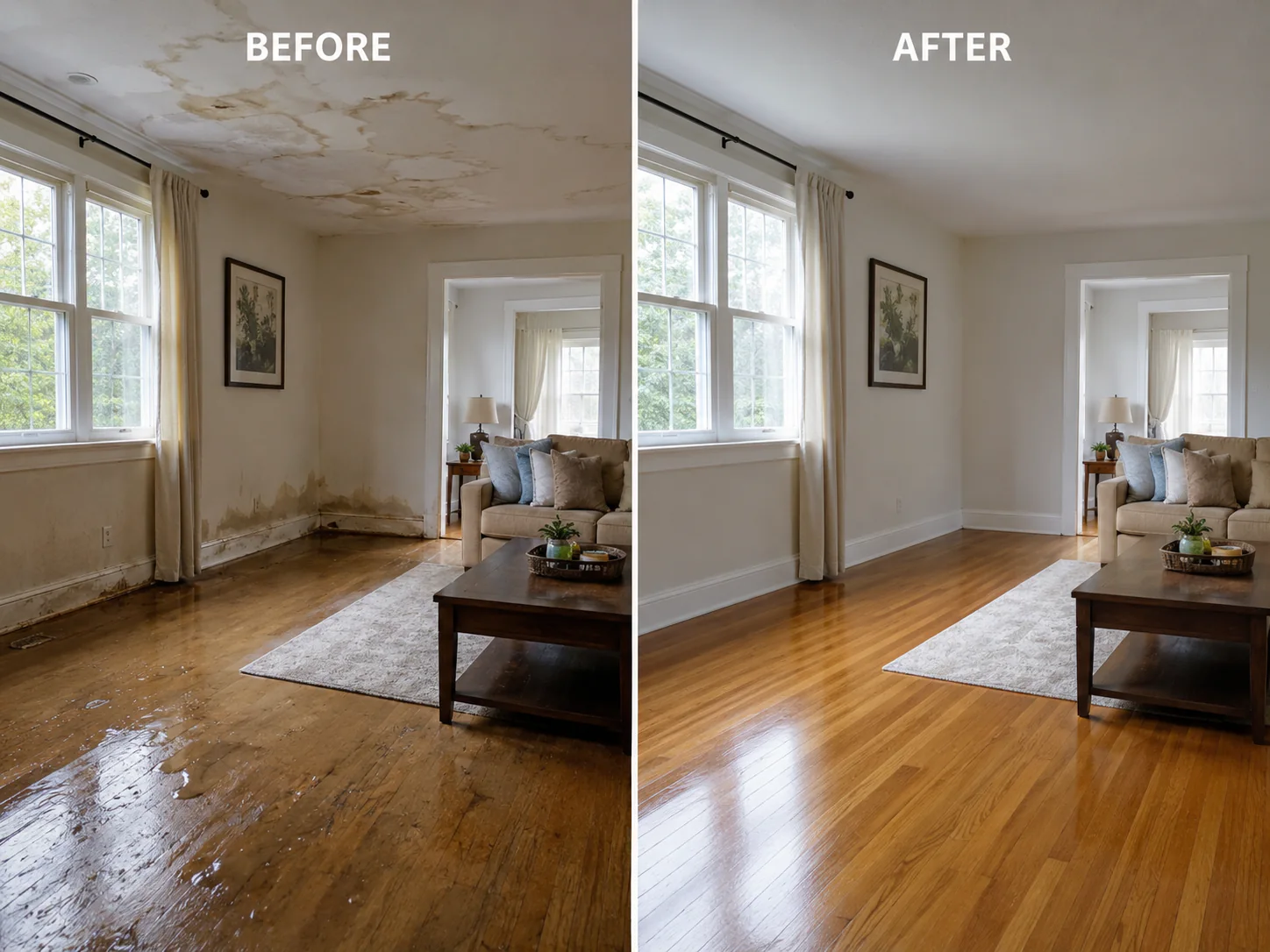
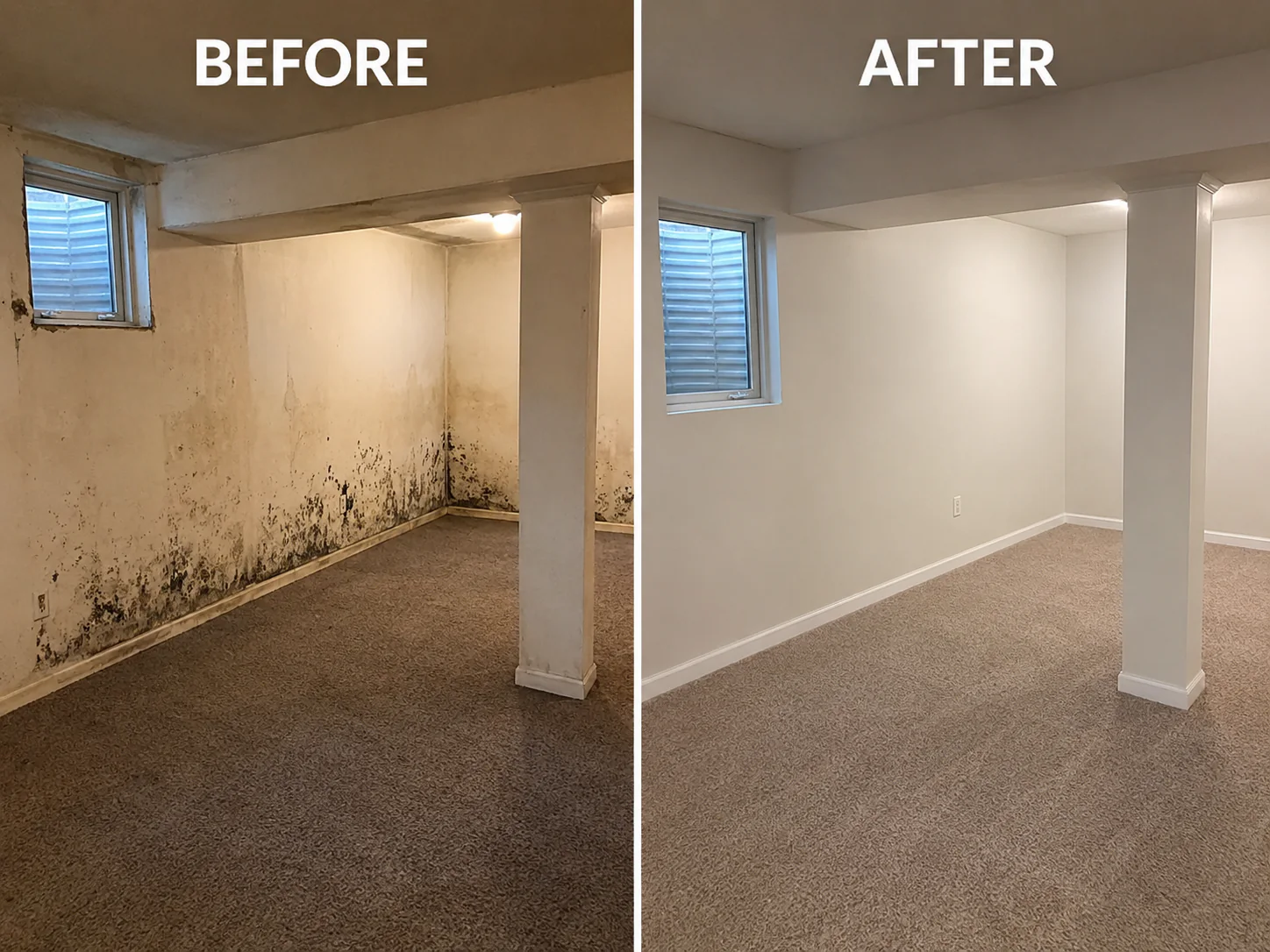
Once the pipe is fixed, the water left in building materials is what causes lasting damage. If it isn't dried, it can lead to mold, wood rot and weakened structure.
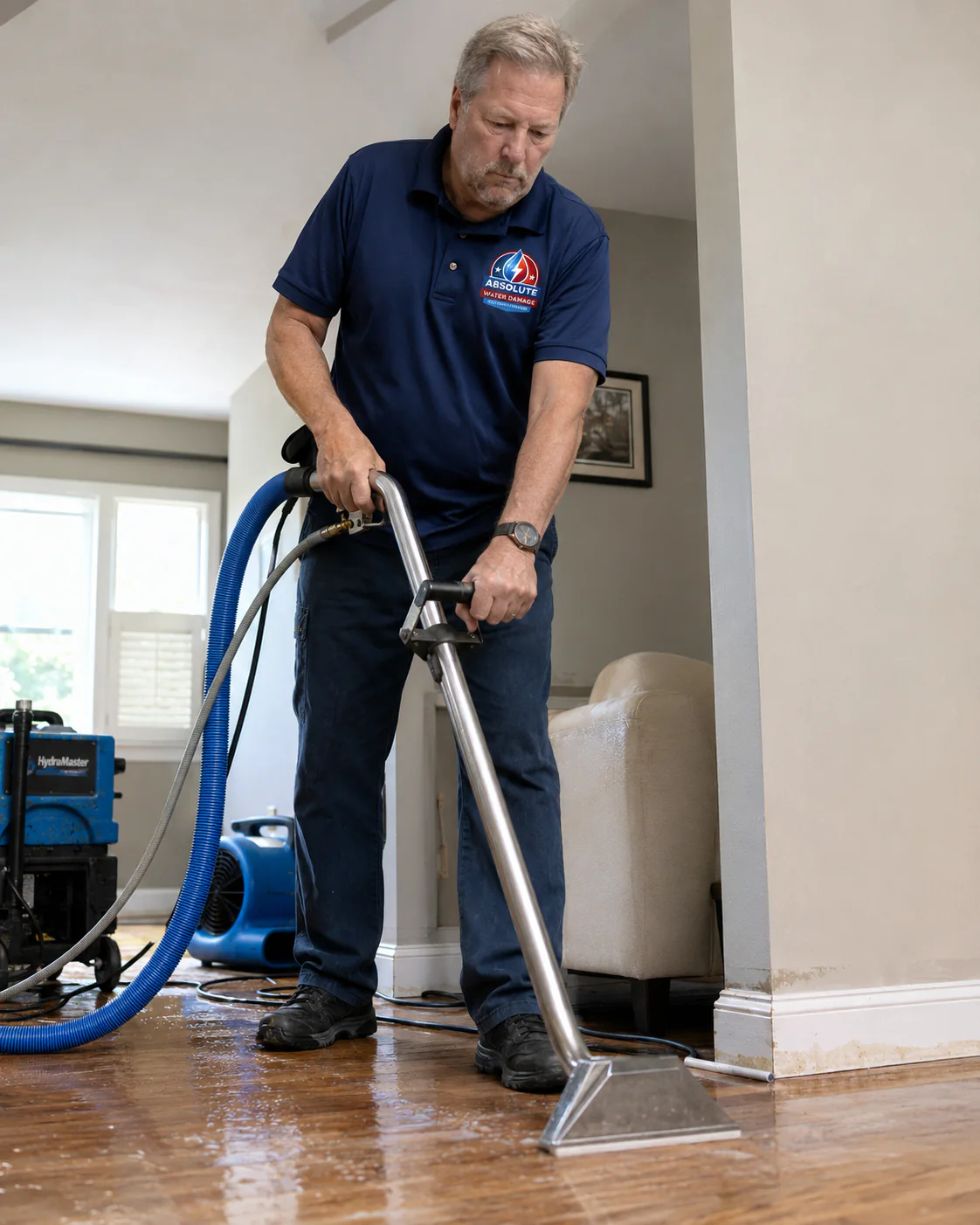
Our technicians are IICRC certified. We bring infrared cameras and moisture detection equipment to find water behind surfaces before it becomes mold. That matters: if a wet wall bay gets closed up anyway, you end up paying for the same repair again next spring.
How the estimate and insurance billing work
We can't give a number before we've seen the property, and we won't guess at a figure sight unseen. We come out, look at your home, then sit down with you to go through an estimate.
- Insurance requires an estimate only for putting the house back together after a loss.
- We price that work in Xactimate, the same software and pricing structure adjusters use.
- In most losses we bill your carrier directly instead of you.
- Before you sign with any contractor, look them up on Washington L&I's free Verify tool.
Preventing the next frozen pipe
After repairs, a few cold-weather habits lower the chance of it happening again.
- Keep the thermostat at 55°F or higher day and night, even when away, per The Old Farmer's Almanac.
- Insulate pipes in crawl spaces, attics, garages and exterior walls, and seal drafts near them.
- On very cold nights, let the farthest faucet drip on both hot and cold.
- Open sink cabinets on exterior walls so room heat reaches the pipes.
- Before winter, remove hoses, shut the indoor valve to outdoor spigots and drain them.
Common questions
What should I do if a pipe bursts?
Close the main water shutoff, stay away from water near outlets or appliances, photograph the damage and list damaged items, then call a licensed plumber for the repair. You can start emergency drying before an adjuster calls you back.
How does burst pipe cleanup work?
After the water is off and the pipe repaired, standing water is removed and the materials are dried. We use infrared cameras and moisture detection equipment to find water behind surfaces, because a wet wall bay closed up anyway means paying for the same repair again.
Why do frozen pipes burst?
Ice blocks the pipe and traps water behind it. As more ice forms, pressure on that trapped water rises until the pipe splits, often at a joint or weak spot.
What else causes a pipe to burst?
A burst usually shows up at a weak spot in the line, like a joint or a section that has already been under stress, so it is worth inspecting pipes for cracks or leaks before cold weather arrives.
Will insurance pay for a burst pipe?
It depends on your policy; some don't cover frozen or burst pipes, so check yours. In most losses we bill the carrier directly, and we'll tell you what to expect before you file.
What happens next
Call us or request help onlineSources
- Everything to Know About Frozen Pipes and Why They Burst - This Old House — thisoldhouse.com
- Frozen Pipes: How to Prevent and Thaw Frozen Pipes | The Old Farmer's Almanac — almanac.com
- How to thaw frozen water pipes and spot the early signs | Homes and Gardens — homesandgardens.com
- Flooded Homes Cleanup Guidance | US EPA — U.S. Environmental Protection Agency