You don't have to wait for an adjuster to call back before emergency mitigation starts.
Protect the house and report the loss before anything else
Your first jobs are to stop further damage and notify your insurer. Policies require reasonable steps to limit harm, known as the duty to mitigate.
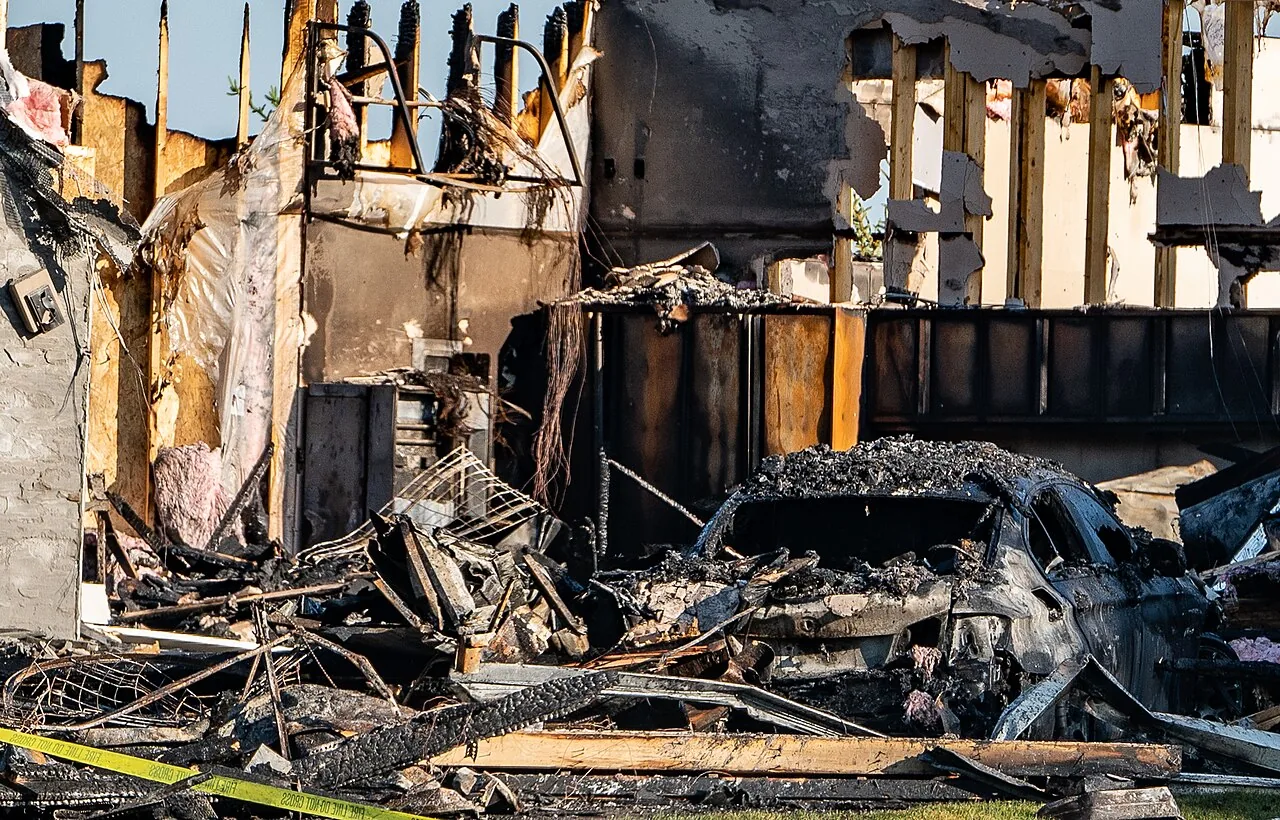
- If anything is still smoldering, call the fire department to prevent a flare-up.
- Board up openings and consider temporary fencing to keep people out, then keep checking the property.
- Report the loss by phone or email to your agent as soon as you reasonably can.
- Photograph everything before you move it.
- Handling soot wrong can drive it permanently into finishes, so call us before you start moving anything.
- You have the right to start emergency mitigation before an adjuster calls you back.
Dealing with the adjuster: you can bring your own estimate
The adjuster works for the insurance company, so treat their estimate as a starting point, not the final word. You don't have to accept it.
We write the scope in Xactimate, the pricing software insurers use, so it holds up with adjusters. We price the rebuild in Xactimate, and in most losses we bill your carrier directly instead of you.
- Ask your insurer for an advance to cover clothes and necessities, and keep every receipt.
- If a check says it is paid "in full release" of your claim, the guide advises crossing that out, initialling it and writing that the claim is still open.
- Wait at least a few months before letting the claim close, since overlooked losses often turn up later.
What drives the insurance payout and the repair cost
Your coverage type sets what the insurer owes, and the scope of damage sets what repairs cost. We won't guess at a figure sight unseen. A figure comes only after we've looked at your home in person, and then we sit down with you and go through the estimate together.
- Actual cash value pays to restore the home to its market value just before the fire.
- Replacement coverage pays what it takes to replace the home or contents, whatever their prior value.
- Contents may be covered only at actual cash value even on a replacement policy. Check yours.
- Per sdao.com's fire insurance guide, $300 a week on groceries before a fire and $400 a week eating out after means only the $100 difference is claimable.
- Loss-of-use covers only extra living costs over your normal spending, though a motel bill is usually claimable in full.
- Insurance requires an estimate only for putting the house back together after a loss.
Comparing fire restoration contractors before you sign
Get written bids so you can compare scope and price side by side, and check references for reliability and communication.
- Look the contractor up on Washington L&I's free Verify tool before you sign.
- Ask whether there is any charge for the first visit.
- We give no price over the phone; we won't guess at a figure sight unseen.
- Our bids use Xactimate, the same pricing system the insurance industry uses.
- Our technicians are IICRC certified.
When talks with the insurer stall: public adjusters
If your own estimate still doesn't lead to an acceptable settlement, a public adjuster can negotiate with the insurer for you. That can be worth the fee if the settlement rises significantly.
- Public adjuster: independent and licensed, paid by you; per sdao.com's guide, typically nine to fifteen percent of what you recover.
- Your own estimator or contractor: works for and is paid by you, and gives you a scope to compare with the insurer's.
- If the insurer seems to be dragging its heels, write to them and consider copying your state's insurance department.
Common questions
Should I keep paying premiums on a damaged home?
Yes. The policy also carries liability protection for your household. If the home is destroyed, ask the insurer to reduce the structure coverage and the premium to match.
Can work start before the adjuster visits?
Yes. Emergency mitigation can start before your adjuster calls back. Photograph everything before you move it.
Do you bill my insurance company directly?
In most losses, yes. We price the work in Xactimate, the same software and pricing structure adjusters use, and bill your carrier directly instead of you.
Can you give me a price over the phone?
No. We can't give a number before we've seen the property. We assess first, then review an estimate with you.
What happens next
Request a fire damage estimate