Water at the bottom of the tank or on its body usually means replacement, while leaks at fittings or valves are often repairable. An air conditioner dripping water most often has a clogged condensate drain, a frozen coil or a damaged drain pan, so turn it off first. Water that has already soaked floors or walls needs checking beyond the appliance itself.
A leaking water heater: confirm the source, then shut it down
Lennox's guidance is to make sure the water heater is really the source before acting: dry the area around the tank and watch where fresh water appears. Then stop more water entering the tank and cut the power. Never work around a heater that is still switched on.
- Turn the cold-water shut-off on top of the heater clockwise to stop water entering the tank.
- Electric heater: flip its breaker. Gas heater: set the thermostat to off or pilot.
- If it is still leaking and help isn't coming soon, run a garden hose from the bottom drain valve to a floor drain or outside.
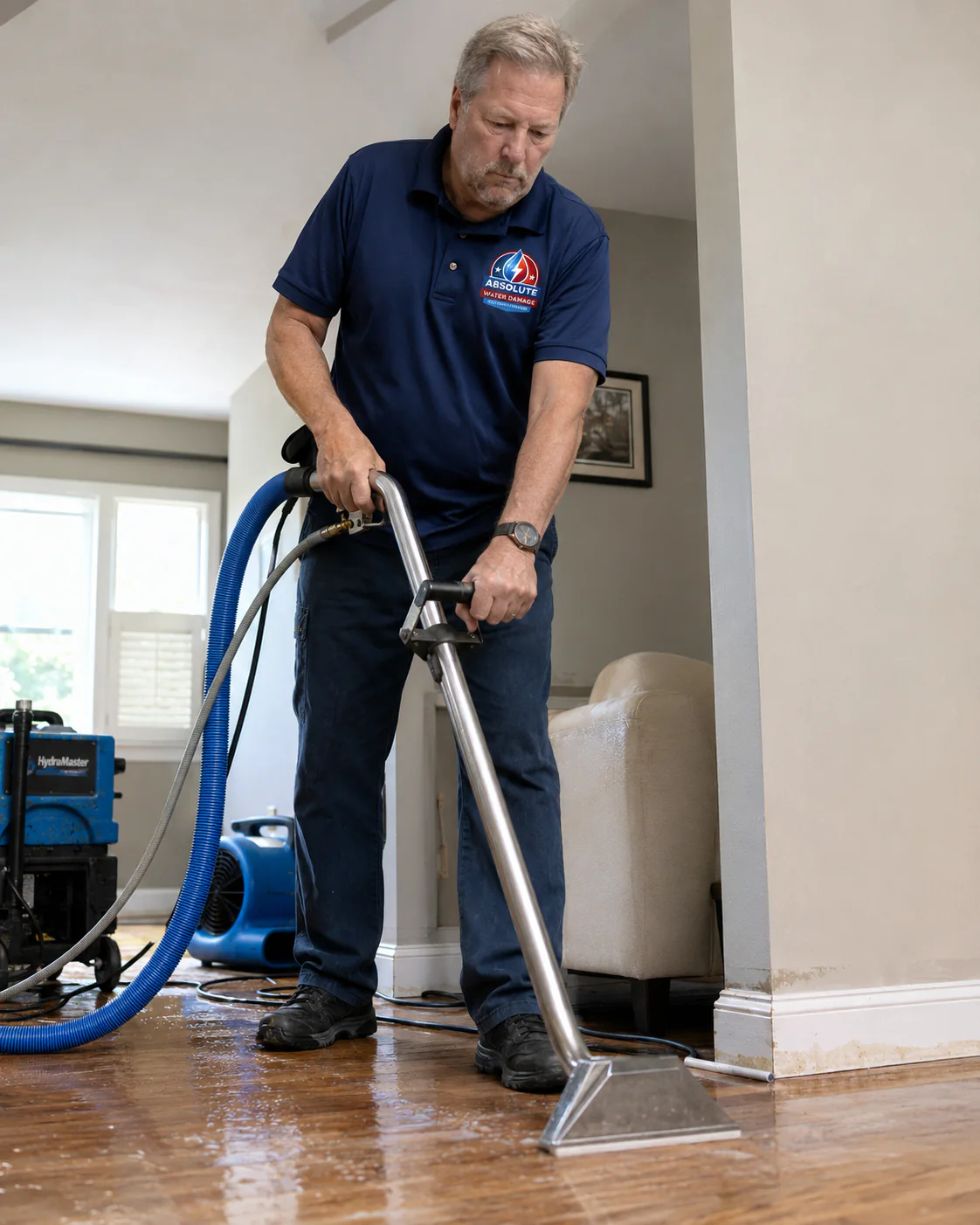
- Mop or wet-vacuum standing water to protect flooring and reduce mold risk.
- Take photos of the leak and any damage before moving things; they help with an insurance claim.
Where the water appears tells you whether it can be repaired
The location of the leak is the clearest clue. Fittings and valves can usually be tightened or replaced, but water coming from the tank itself points to corrosion that can't be fixed. Age matters too: Lennox puts typical water heater life at 8 to 12 years.
- Pipe connections on top of the tank: often loose and can be tightened with a wrench.
- Drain valve near the bottom: often repairable by tightening or replacing the valve.
- Relief valve discharge pipe: either pressure is too high or the valve needs replacing.
- Pooling at the base or moisture on the tank body: likely corroded through, so the heater needs replacing.
- Lennox suggests a pressure-reducing valve if house pressure stays above 80 psi.
Why a slow leak still deserves quick attention
Even a small drip can soak subfloor and walls over time, and a failing tank can release a lot of water at once. Lennox notes mold can start growing within 24 to 48 hours of water exposure.
- Lennox says a tank failure can release 40 to 80 gallons in minutes.
- Water near outlets, wiring or the electrical panel is a shock hazard.
- If you smell gas near a gas heater, leave the house and call your gas company.
- A leaking tank, gas or electrical work, or an unknown source are reasons to call a professional.
An air conditioner leaking water usually has a drainage problem
Some condensation is normal: moisture forms on the indoor coil, drips into a pan and drains away. A leak means that water isn't being collected or carried off. Bryant and Carrier both list a clogged condensate drain line, a frozen evaporator coil and a damaged drain pan as the usual causes. Turn the system off while you check.
- Check the air filter; Bryant suggests replacing it about every one to three months.
- Look where the drain line leaves the unit for visible clogs from dirt, algae or debris.
- Check the drain pan beneath the indoor unit. Rust, visible cracking or water sitting in it can signal a clog or a damaged pan.
- If the coil is iced, let it thaw with the system off. Don't chip at the ice.
- Refrigerant work needs an EPA Section 608-certified technician, per Bryant.
- Carrier puts typical AC leak repairs at $200 to $1,500; Bryant says clearing a drain line is often under $150.
Leak detection: finding water you can't see
The appliance is only part of the picture. Signs worth noticing include repeated pooling, mold or mildew near a unit, and indoor air that stays unusually humid. Bryant notes smart-home water sensors placed near an indoor HVAC unit can alert your phone when a pan overflows.
Our IICRC-certified technicians bring infrared cameras and moisture detection equipment to find water behind surfaces before it turns into mold. It matters because a wall bay that reads wet and gets closed up anyway means paying for the same repair again next spring.
What happens if water has reached your floors or walls
We come out, look at your home, then sit down with you and go through an estimate. We won't guess at a figure sight unseen. We'll tell you what to expect before you file anything with insurance.
- Insurance requires an estimate only for putting the house back together.
- We price that work in Xactimate, the software adjusters use, and in most losses bill your carrier directly.
- Bryant notes insurance may cover water damage from an AC leak but not the AC repair itself unless a covered event caused it.
- We answer 24 hours a day, seven days a week, at (206) 856-3173, or you can send a request online.
Common questions
Can I keep running my air conditioner while it leaks?
Bryant and Carrier both advise against it. Running a leaking system can add water damage and lead to mold or further mechanical problems. Switch it off, check the filter, drain line and pan, and call an HVAC professional if the leak continues.
Is a dripping water heater fixable or does it need replacing?
It depends on where the water comes from. Leaks at the top fittings, drain valve or relief valve are often repairable. Water from the tank body or pooling at the base usually means the tank has corroded and needs replacing, according to Lennox.
Can you give me a price for the water damage over the phone?
No. A figure only comes after we've looked at it in person, and then we go through the estimate with you.
Next step
Water damage help in Bothell and nearbySources
- Water Heater Leaking Water? Here’s What to Do — lennox.com
- Why Is My AC Leaking Water? Causes & Fixes | Bryant — bryant.com
- Why Is My AC Leaking Water? | Troubleshooting & Repair — carrier.com
- Why is your air conditioner leaking water? | Lennox.com — lennox.com
- Mold Remediation in Schools and Commercial Buildings Guide: Chapter 4 | US EPA — U.S. Environmental Protection Agency
- Flood Cleanup to Protect Indoor Air and Your Health | US EPA — U.S. Environmental Protection Agency
- A Brief Guide to Mold, Moisture, and Your Home EPA-402-K-02-003, September 2010 — U.S. Environmental Protection Agency