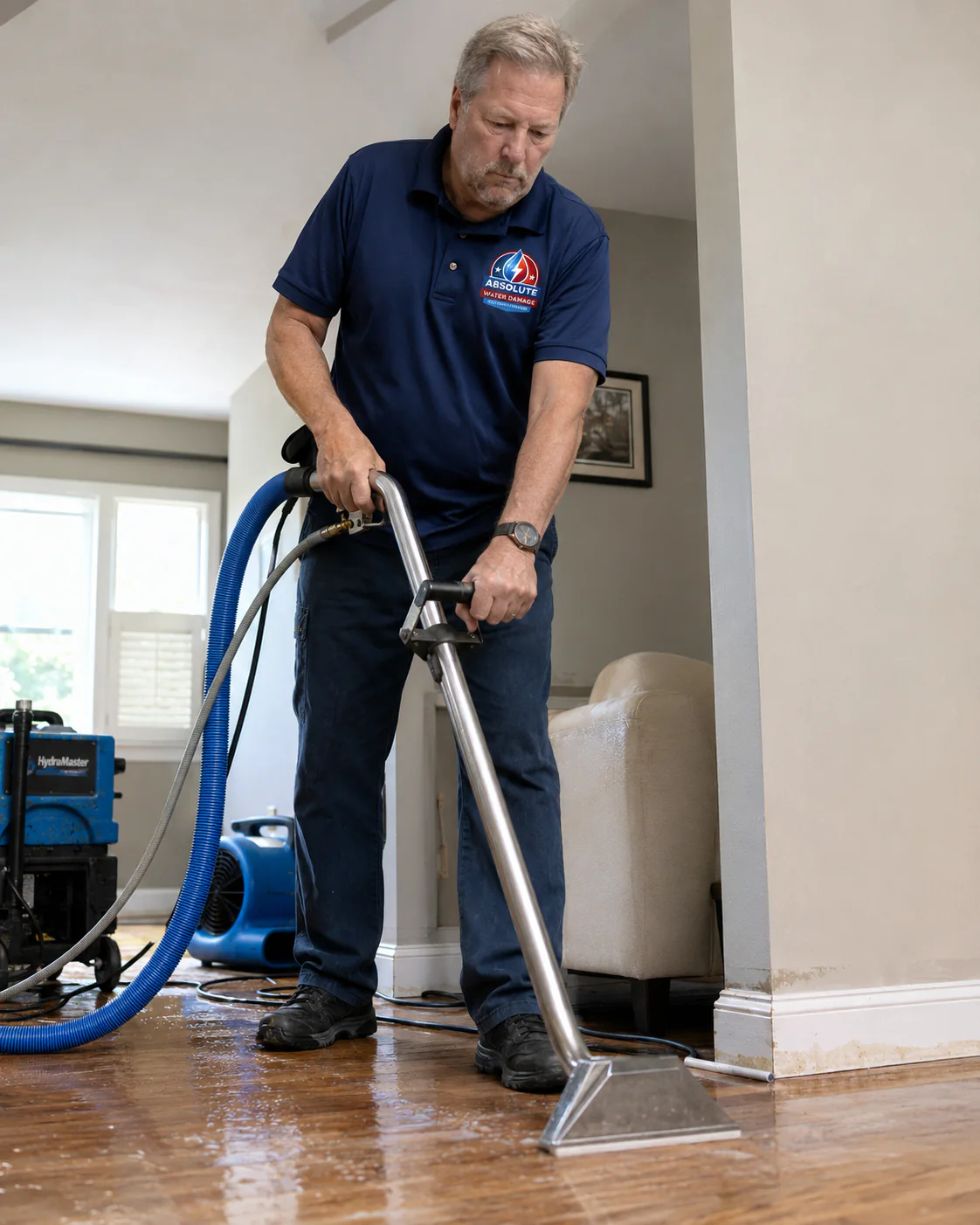
The fix starts with finding where the water comes from. After heavy rain it is often poor drainage or saturated soil, but plumbing leaks and condensation also cause it. Often several causes combine.
Why water collects in a crawl space after heavy rain
A crawl space sits at or below the level of the surrounding soil, so water from the ground, the yard and the plumbing can all reach it. This Old House notes that many homes have more than one source at once. Fixing only one of them may not solve the problem.
- Groundwater pressure: when heavy rain saturates the soil around a home, that water can be forced into the crawl space through the concrete, and it doesn't need an obvious crack to get in.
- Plumbing leaks: leaking pipes or HVAC parts add water and raise humidity over time.
- Condensation: warm, humid air turns to water on cool surfaces such as ducts.
What crawl space water damage can lead to over time
Even small amounts of moisture can cause bigger problems over time. This Old House points out that tighter modern homes give moisture fewer ways to escape, so it builds up. Air from the crawl space also moves into the rooms above.
- Mold and rot: damp framing and insulation can grow mold, and the structure can weaken over time.
- Energy costs: damp air takes more effort to warm or cool, which puts extra load on your heating and cooling equipment and can raise utility bills.
- Air quality: moisture, odors and allergens can rise into the living space.
- Pests: damp spaces attract insects and rodents.
Signs of crawl space moisture to check from inside the house
You won't always see the water first. These signs, listed by This Old House, suggest it's time to look below the floor.
- A musty or damp smell, especially on the first floor.
- The house feels humid even while the HVAC system is running.
- Floors that feel soft, uneven, warped or sagging.
- Mold on insulation, joists or ducts, or condensation on pipes.
- More insects or rodents than usual.
Options for fixing crawl space water and what each one does
The right fix depends on the source. If water already stands in the space or floods often, a sump pump becomes relevant. This Old House notes that many homes need drainage work and moisture control together.
- Exterior drainage: gutters, extended downspouts and corrected grading keep rain from pooling at the foundation.
- Vapor barrier: a heavy plastic liner over the soil cuts moisture rising from the ground; sealed seams and edges help it work.
- Sump pump: removes water before it builds up in spaces with standing water or frequent flooding.
- Dehumidifier: lowers humidity and condensation and limits conditions for mold.
- Sealing vents and air leaks: less outside air helps keep humidity steady.
What to do first when you find standing water
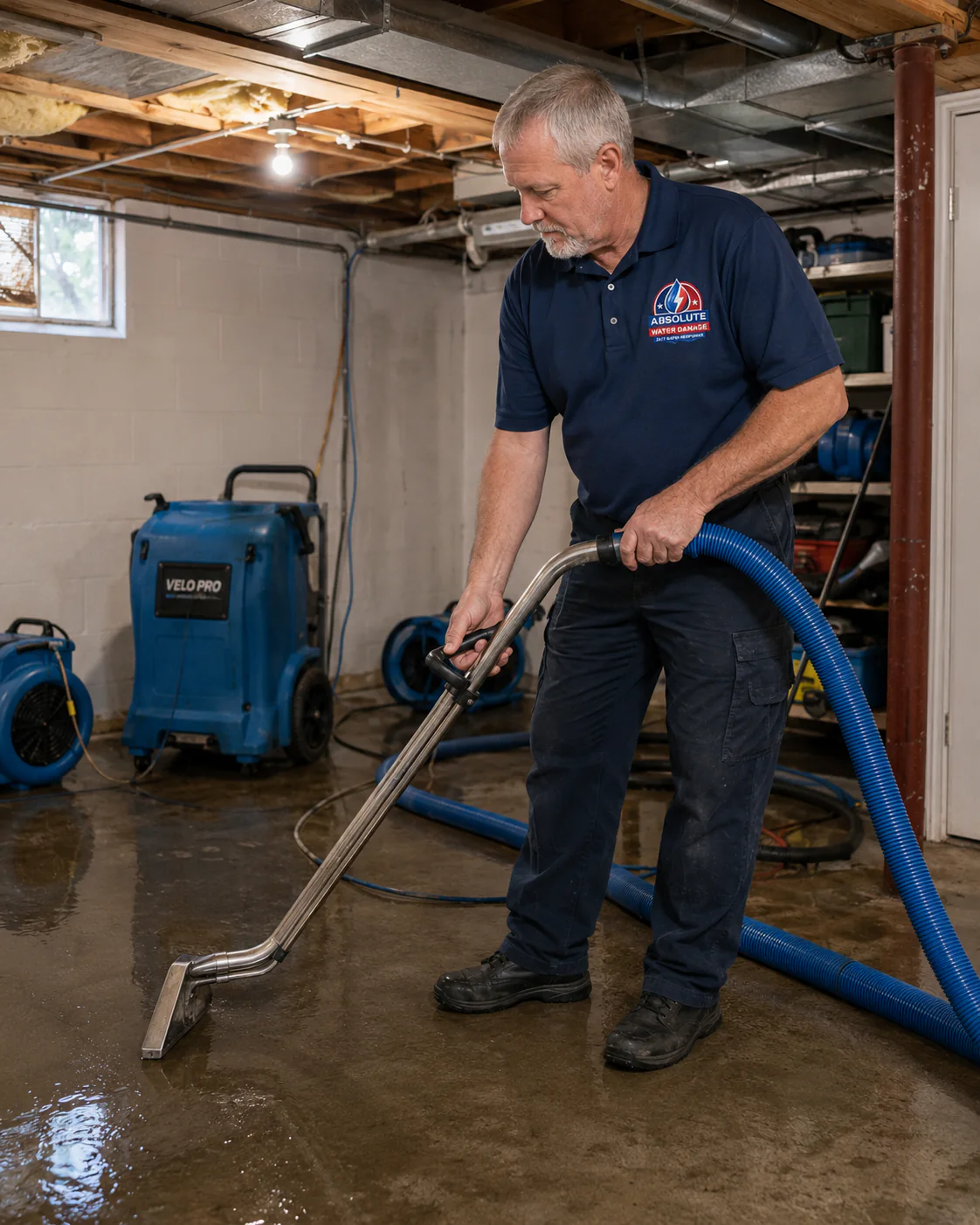
Before anything is moved, photograph everything. If insurance may be involved, you don't have to wait for an adjuster to call back before emergency mitigation starts.
- Photograph the water, the space and any damaged items before you move them.
- Note anything that points to a source, such as overflowing gutters or a dripping pipe.
- Before you hire anyone, look the contractor up on Washington L&I's free Verify tool.
- Ask whether there is a charge for the first visit.
- Get written bids so you can compare scope and price, and check references.
How we assess crawl space water and price the work
We find the moisture source first. Our technicians are IICRC certified and bring infrared cameras and moisture detection equipment to find water behind surfaces before it becomes mold. We won't guess at a figure sight unseen. We come out, assess your home, then sit down with you and go through the estimate together.
If insurance is involved, we price in Xactimate, the same software adjusters use. In most losses we bill your carrier directly. Before we leave, you and your carrier get verification, photographs and moisture logs.
Common questions
Is water in my crawl space after heavy rain a sign of a bigger problem?
It can be. After heavy rain, saturated soil can push water through foundation walls and floors. Poor grading or gutters can also steer runoff toward the house, This Old House explains. Either way, find the source so the fix matches the cause.
Do I have to wait for my insurance adjuster before work starts?
No. You have the right to start emergency mitigation before an adjuster calls you back. We'll tell you what to expect before you file anything.
Can you give me a price over the phone?
No. A figure comes only after we've looked at your home in person. Then we go through the estimate with you.
What happens next
See how our damage service worksSources
- What To Do About Water in Your Crawlspace - This Old House — thisoldhouse.com
- Water Management of Existing Crawlspace Floor | Building America Solution Center — Building America Solution Center (PNNL, U.S. Department of Energy)
- Concrete Vapor Retarders | Prevent Flooring Failures — Wagner Meters
- Sources & Solutions for Concrete Floor Moisture Problems — Wagner Meters