System Sensor's white paper on nuisance alarms calls these nuisance alarms, and separates them from false alarms caused by a defective unit. Confirm there is no fire first, then check where the alarm sits, how clean it is and how old it is.
Steam, humidity and cooking smoke near the alarm are the usual trigger
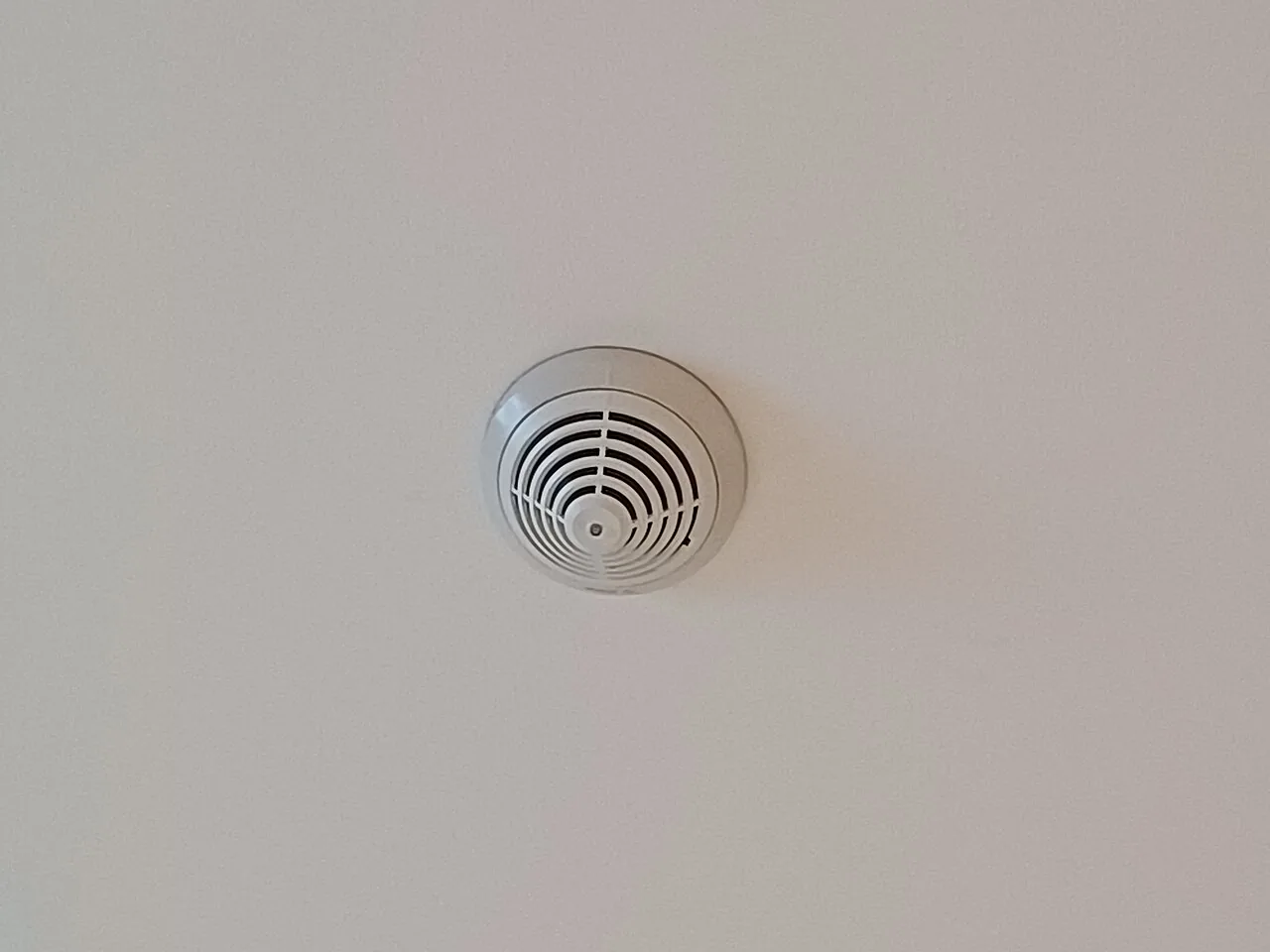
Nuisance alarms happen when a detector meets smoke, steam, moisture or humidity that does not come from a fire. If your alarm tends to sound after a shower, while cooking or when a door opens to a steamy room, placement is the first thing to look at.
- System Sensor's white paper cites a national study: a third of alarms with nuisance problems sat near a smoke, steam or moisture source, often under five feet away.
Dust, insects and interference can trip an alarm with nothing in the air
An alarm can sound when the air looks clear. Detectors check their sensing chamber at regular intervals, and anything that briefly pushes the reading past the alarm threshold can set it off, smoke or not.
- Dust slowly building up inside the chamber makes the detector more sensitive over time, until it may alarm on its own.
- Short spikes can come from airborne dust, settled dust being disturbed, small insects or radio-frequency interference.
- Regular cleaning is recommended under the NFPA 72 inspection, testing and maintenance guidelines.
- Some detectors use a fixed sensitivity and struggle to tell fire from non-fire sources, which adds to unwanted alarms.
Ionization or photoelectric: match the alarm type to the room
The two common types respond to different kinds of fire.
- Ionization alarms respond faster to flaming fires.
- Photoelectric alarms respond faster to smouldering fires.
- The State Fire Marshal's Office also advises alarms in every bedroom and on every level, interconnected so they sound together.
An old or faulty alarm may need replacing, not cleaning
If placement and cleaning don't stop the alarms, the unit itself may be the problem. System Sensor's paper classes alarms from defective products as false alarms, a separate problem from nuisance alarms.
- Test each alarm at least once a month.
- For battery alarms, change the batteries when the clocks change for daylight saving time.
Why you should fix the cause instead of disabling the alarm
System Sensor's paper notes that lower confidence in alarms can lead to people not responding when there is a fire.
- A survey done for the NFPA, cited by System Sensor, found that just 7% of respondents who reported an alarm believed a fire was underway and that evacuating was the right move.
- Washington fire agencies reported that in 2024, 60% of residential fire deaths happened in homes without working smoke alarms.
Washington rules on who installs and maintains smoke alarms
State law, RCW 43.44.110, covers smoke alarms in many Washington homes, including rentals and homes sold on or after July 1, 2019. Alarms must meet national standards for design, manufacture and installation.
- Property owners must install at least one working smoke alarm.
- Tenants must maintain alarms and replace batteries as needed.
- Renters with a problem alarm should contact their landlord or property manager.
If the alarm was real and left smoke or soot behind
If smoke or soot reached walls, ceilings or belongings, call us before you start moving or cleaning anything, because handling soot wrong can drive it permanently into finishes. Photograph everything before you move it.
Emergency mitigation can start before your adjuster calls back. We don't give a price over the phone: we look at your home in person first, then sit down with you and go through the estimate together. If insurance is involved, we price in Xactimate, the same software adjusters use, and in most losses we bill your carrier directly. Our technicians are IICRC certified.
Common questions
What is the difference between a nuisance alarm and a false alarm?
According to System Sensor's white paper, a nuisance alarm is set off by something that resembles smoke but isn't from a fire, such as steam or dust. A false alarm comes from something unlike smoke at all, such as a defective unit.
Can I just take the battery out of an alarm that keeps going off?
It's safer to fix the cause. Working alarms greatly improve the chance of surviving a home fire, and Washington fire agencies reported that 60% of residential fire deaths in 2024 happened in homes without working alarms. Move, clean or replace the alarm instead.
How often should smoke alarms be replaced?
Test them monthly in the meantime.
What happens next
See how we handle smoke and fire damageSources
- Smoke Alarms in Dwellings - Washington State Patrol — wsp.wa.gov
- Home Smoke Alarms - Washington State Patrol — wsp.wa.gov
- Reducing Detector-based Nuisance Alarms Whitepaper — prod-edam.honeywell.com
- Home Smoke and Carbon Monoxide Alarms - Washington State Patrol — Washington State Patrol (State Fire Marshal's Office)
- Change Your Clocks, Change Your Batteries - Washington State Patrol — Washington State Patrol (State Fire Marshal's Office)
- Cooking Safety - Washington State Patrol — Washington State Patrol