Washington's Department of Health says mold often appears first in kitchens, bathrooms, laundry rooms and basements, and can hide behind wall coverings, ceiling tiles and carpet. Below is what to check in each part of the house and what to do in the first day or two.
Musty smells and specks are signs of water damage in any room
Water damage often shows up as mold before you see the water. A musty odor or small black or white specks on a damp surface usually mean something has been wet for a while. If you smell mold but can't see it, it may be behind wallpaper, inside a wall or ceiling, or under carpet.
- A musty odor, even with nothing visible.
- Small black or white specks on damp walls or surfaces.
- Condensation or water droplets around windows.
- Paint that peels, which can happen where mold grows underneath.
- Staining on surfaces; mold can leave stains that cleaning may not fully remove.
- A rotting wooden window frame or sill near a leaky window.
Bathroom water damage: specks on walls and mold that keeps coming back
Bathrooms combine heavy water use and humidity, so they are among the first places mold appears. Look for specks along damp walls and mold in the shower that returns after cleaning.
- Black or white specks along damp bathroom walls.
- Shower mold that reappears: more ventilation and frequent cleaning usually keep it down, says the EPA.
- No working exhaust fan, or a fan that isn't run long enough.
- Snohomish County Health advises running the fan while bathing and at least 30 minutes after.
Ceiling and attic water damage: roof leaks and hidden growth above you
Mold can grow hidden behind ceiling tiles, so a musty smell in a room can come from above. Attics that aren't ventilated and insulated also invite moisture problems.
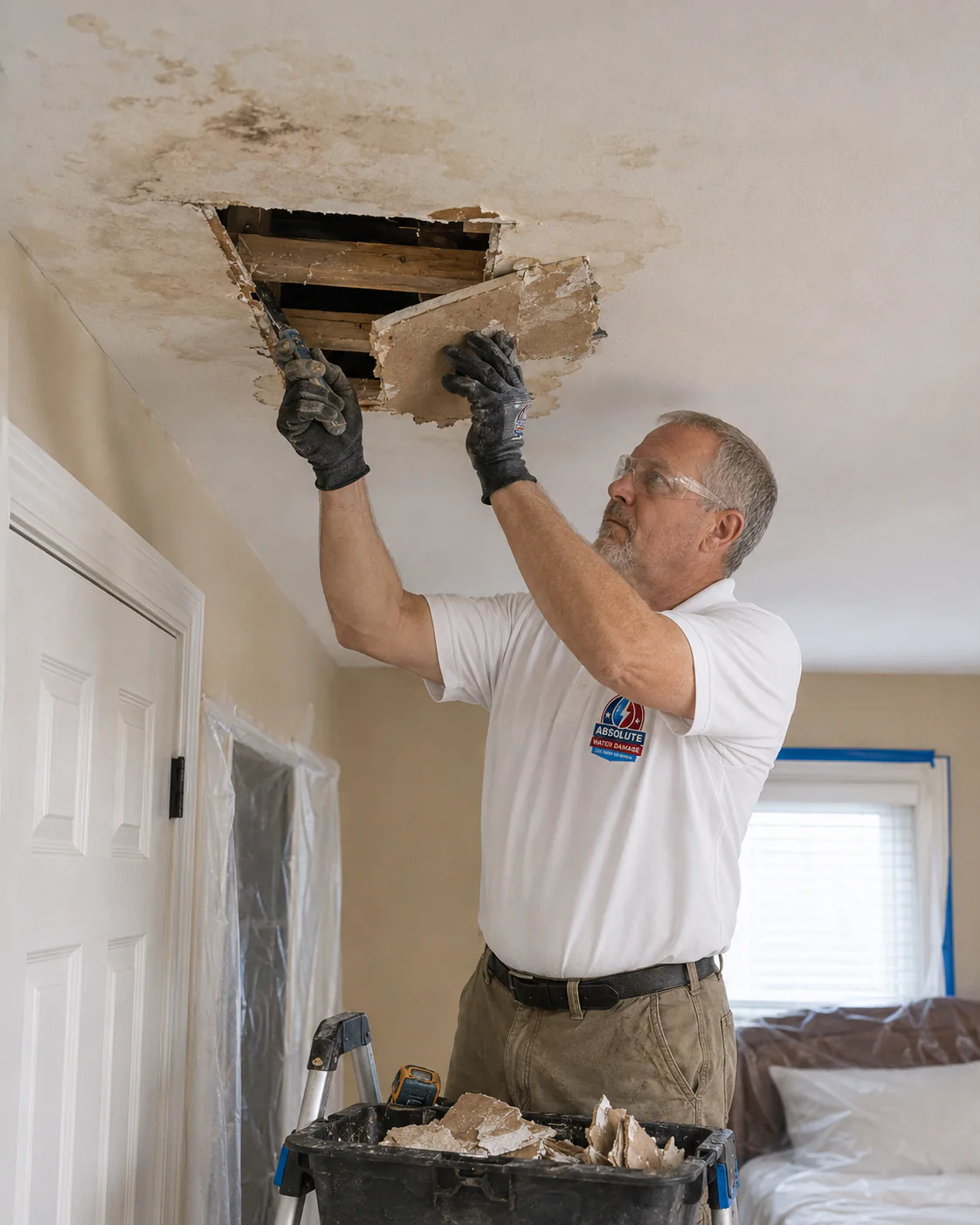
- A musty smell with no visible source may come from inside the ceiling.
- Mold on ceiling tiles; porous tiles may need to be thrown out rather than cleaned.
- Signs of a roof leak; health agencies say stop roof leaks first.
- An attic that lacks ventilation or insulation.
Wall water damage: cold exterior walls, closets and behind furniture
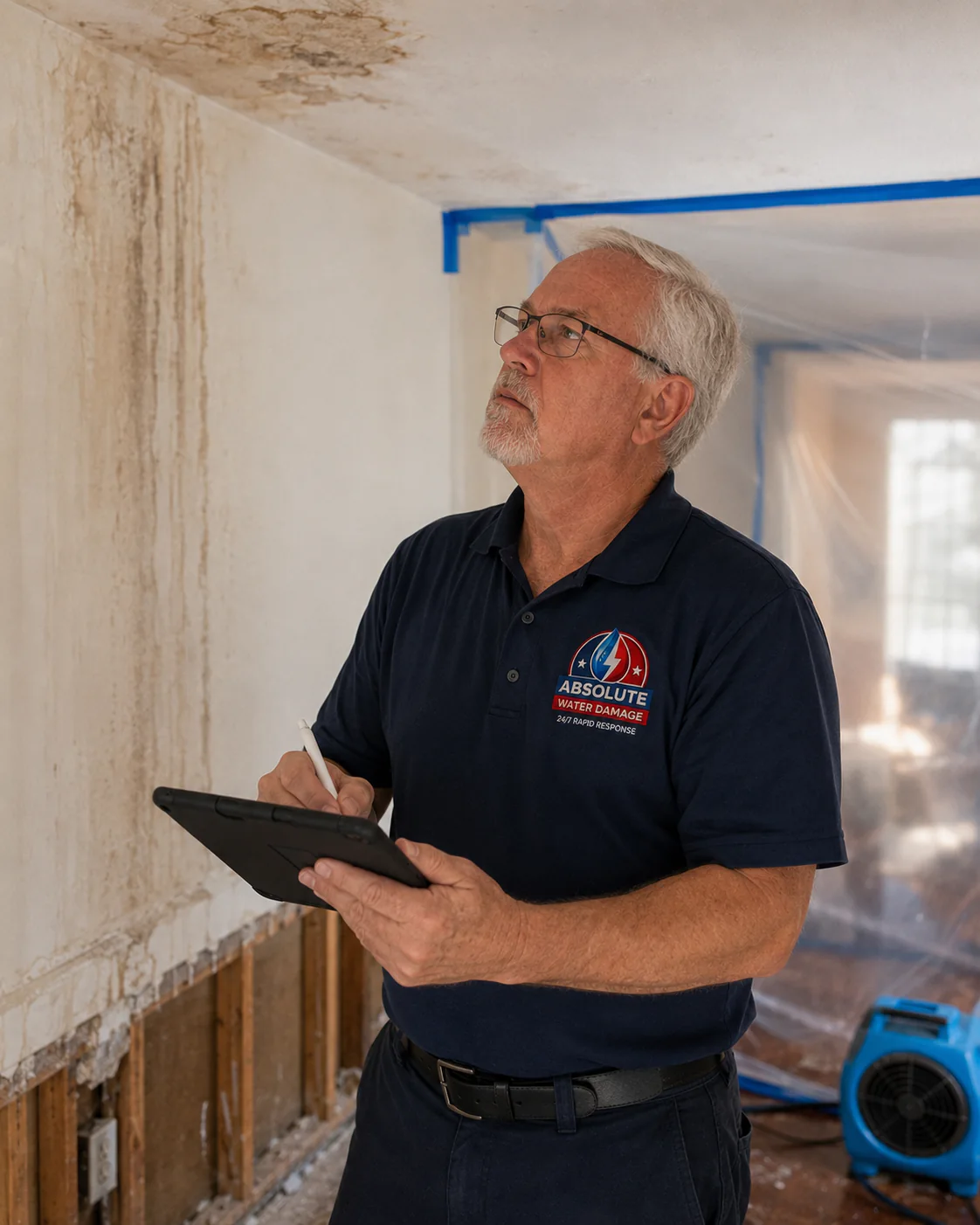
Walls show water damage where leaks run inside them and where warm, moist air condenses on cold exterior walls. Check behind dressers and headboards and inside closets where items sit against an outside wall. Mold can also grow unseen inside wall spaces.
- Mold on the inside of cold exterior walls.
- Growth behind dressers, headboards and stored items in closets.
- Peeling paint or caulk; painting over mold lets it keep growing underneath.
- Leave a few inches between furniture and outside walls so air can move.
Basement water damage: damp walls, humidity and stored items
Specks on damp basement walls and mold on stored items, such as a suitcase, are typical signs. If a basement stays humid even with ventilation, a dehumidifier can help.
- Black or white specks along damp basement walls.
- Mold on belongings stored in a humid basement.
- Water pooling near basement walls or concrete slabs; move it away.
- Carpet that got wet; it easily supports mold growth.
What to do first: dry it fast, photograph it, and know when to get help
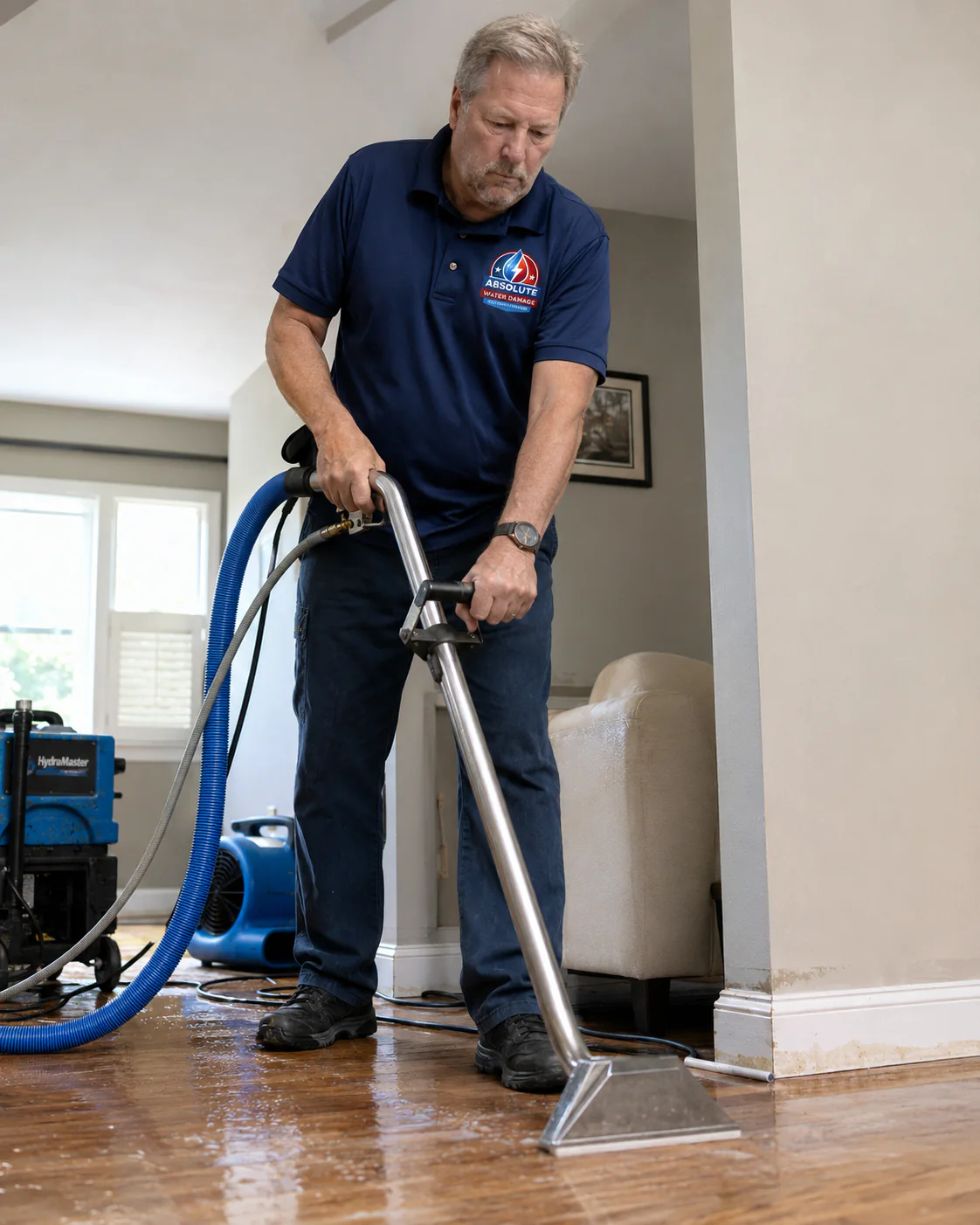
Stop the water and dry wet areas and items quickly. The EPA says drying within 24 to 48 hours helps prevent mold. Before you move anything, photograph everything. Whether to handle it yourself depends on size and the type of water.
- Small area: under about 10 square feet (roughly 3 ft by 3 ft), the EPA says most homeowners can clean it themselves.
- Larger than 10 square feet, or a lot of water damage: consider a professional.
- Sewage or other contaminated water, or mold in hidden places: hire a professional.
- Don't paint or caulk over mold; clean and dry first.
- Don't run the HVAC if you suspect it is contaminated; it could spread mold.
- Have health concerns? Talk to a health professional before cleanup.
How we find hidden moisture before anything is closed up
That matters because a wall bay that reads wet and gets closed anyway can mean paying for the same repair again next spring.
A figure comes only after we've looked in person, and then we sit down with you and go through the estimate together. If insurance is involved, we price in Xactimate, the software adjusters use, and in most losses we bill your carrier directly.
- You don't have to wait for an adjuster to call back before emergency mitigation starts.
- Before we leave, you and your carrier get verification, photographs and moisture logs.
Common questions
Do I need a mold test to confirm water damage?
Usually not. Washington's Department of Health and the Snohomish County Health Department both say mold testing is generally unnecessary, since a musty smell or visible growth is typically enough to tell you there's a problem. The priority is stopping the water source and drying out the affected area.
Can I just paint over a water stain or mold spot?
No. Paint over mold is likely to peel, and the mold keeps growing underneath. Clean the mold and dry the surface before painting, and fix the water source or it will most likely come back.
Should I wait for my insurance adjuster before doing anything?
You don't have to wait for an adjuster to call back before emergency mitigation starts. Photograph everything before you move it, and we'll tell you what to expect before you file anything.
What happens next
See how our water and sewage damage service worksSources
- Mold Frequently Asked Questions — doh.wa.gov
- Mold & Air Quality | Snohomish County Health Department, WA — snohd.org
- A Brief Guide to Mold, Moisture, and Your Home EPA-402-K-02-003, September 2010 — epa.gov
- Mold Cleanup in Your Home | US EPA — U.S. Environmental Protection Agency
- A Brief Guide to Mold, Moisture and Your Home | US EPA — U.S. Environmental Protection Agency
- Homeowner's and Renter's Guide to Mold Cleanup After Disasters — U.S. Environmental Protection Agency (with HUD, FEMA, NIH, CDC)