This guide covers the safe steps you can take yourself, what a professional visit involves, how insurance estimates work, and what is and isn't known about how long smoke effects linger, so you know what to ask for.
Protect your lungs and indoor air before cleaning
Soot and fine smoke particles get stirred up when you clean, so control the air first. EPA guidance on smoke exposure focuses on filtering indoor air and not adding more pollution, and those habits apply while you deal with smoky rooms.
- EPA advises NIOSH Approved N95 respirators that fit snugly; dust masks and bandanas don't protect against smoke particles.
- Don't vacuum unless the vacuum has a HEPA filter, per EPA.
- With central air or a forced-air furnace, EPA suggests MERV 13 filters (or as high as the system allows) and running the fan continuously.
- Pick a portable air cleaner sized for the room that produces little or no ozone; EPA calls ozone a harmful air pollutant.
- Skip candles, incense and aerosol sprays indoors, which EPA lists as adding to indoor pollution.
Photograph walls and ceilings before you move or clean anything
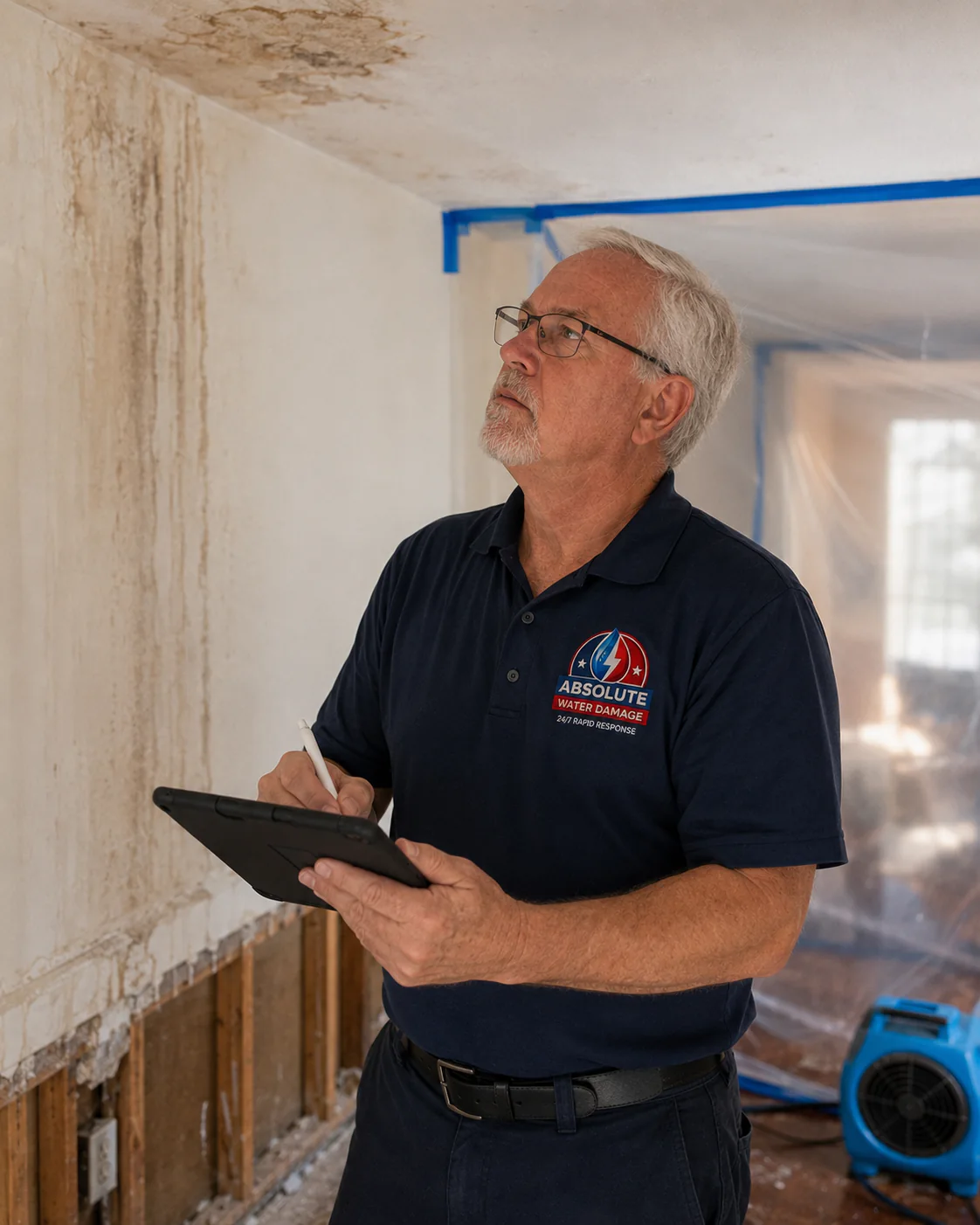
Document first. Photograph everything before you move it, so the original condition of the walls, ceilings and contents is on record. After that, we photograph and measure the affected rooms ourselves before scoping the work.
- Photograph contents in place before moving them.
What a professional smoke damage visit looks like
We come out, look at your home, and then sit down with you to go through an estimate. We don't guess sight unseen: a figure comes only after we've looked in person. If a claim is likely, we tell you what to expect before you file anything.
- Assess first, then review the estimate with you.
- Our technicians are IICRC certified.
- Every technician is trained to a published standard, so the work is defensible to your carrier and a future buyer.
Insurance estimates for smoke damage repairs
For insurance, an estimate is required only for putting the house back together. When insurance is involved, we price in Xactimate, the same pricing software adjusters use, so the scope holds up in review, and in most losses we bill your carrier directly.
- Estimate needed by insurance: the rebuild work, not every step before it.
- Pricing: Xactimate, the system adjusters use.
- Billing: directly to your carrier in most losses, instead of you.
How long smoke damage lasts: what the guidance covers
The EPA material we rely on doesn't give a timeline for how long smoke residue stays on walls or ceilings, so we won't invent one. What the guidance does cover is keeping indoor air cleaner while smoke effects linger.
- EPA notes long smoke events usually have better-air periods; open windows then to let cleaner air in.
- Replace HVAC and air cleaner filters when dirty, which EPA says may be sooner than the maker recommends.
- If you feel sick, EPA advises reducing exposure and contacting your health care provider.
Questions to ask before hiring a smoke cleanup contractor
Get written bids so you can compare scope and price side by side, and check references for reliability and communication.
- Look the contractor up on Washington L&I's free Verify tool before you sign.
- Ask whether there is any charge for the first visit.
- Ask whether they assess in person before giving a figure.
- Ask how they price for insurance and whether they bill your carrier.
Common questions
How do I clean smoke damage on walls and ceiling safely?
Start with the air: wear a well-fitted N95, use only a HEPA-filtered vacuum, run high-efficiency HVAC filters and avoid ozone-producing air cleaners, per EPA. Photograph everything before moving it, then have the rooms assessed in person so the cleaning scope is written down.
How long does smoke damage last?
The EPA guidance we use gives no timeline for smoke residue on surfaces, and we won't guess sight unseen. It does advise airing out during better-air periods and changing filters when dirty.
Can you give me a price over the phone?
No. A figure comes only after we've looked in person; then we sit down with you and go through the estimate together.
What happens next
See how our fire and smoke damage service worksSources
- Wildfire Smoke, A guide for public health officials — epa.gov
- Reduce Your Smoke Exposure | US EPA — epa.gov
- Post-Fire Cleanup Guidance | Washington State Department of Health — Washington State Department of Health
- After a Wildfire | Spokane Regional Health District — Spokane Regional Health District
- Health effects from smoke - Washington State Department of Ecology — Washington State Department of Ecology