What emergency water removal includes, from pump-down to dry-out
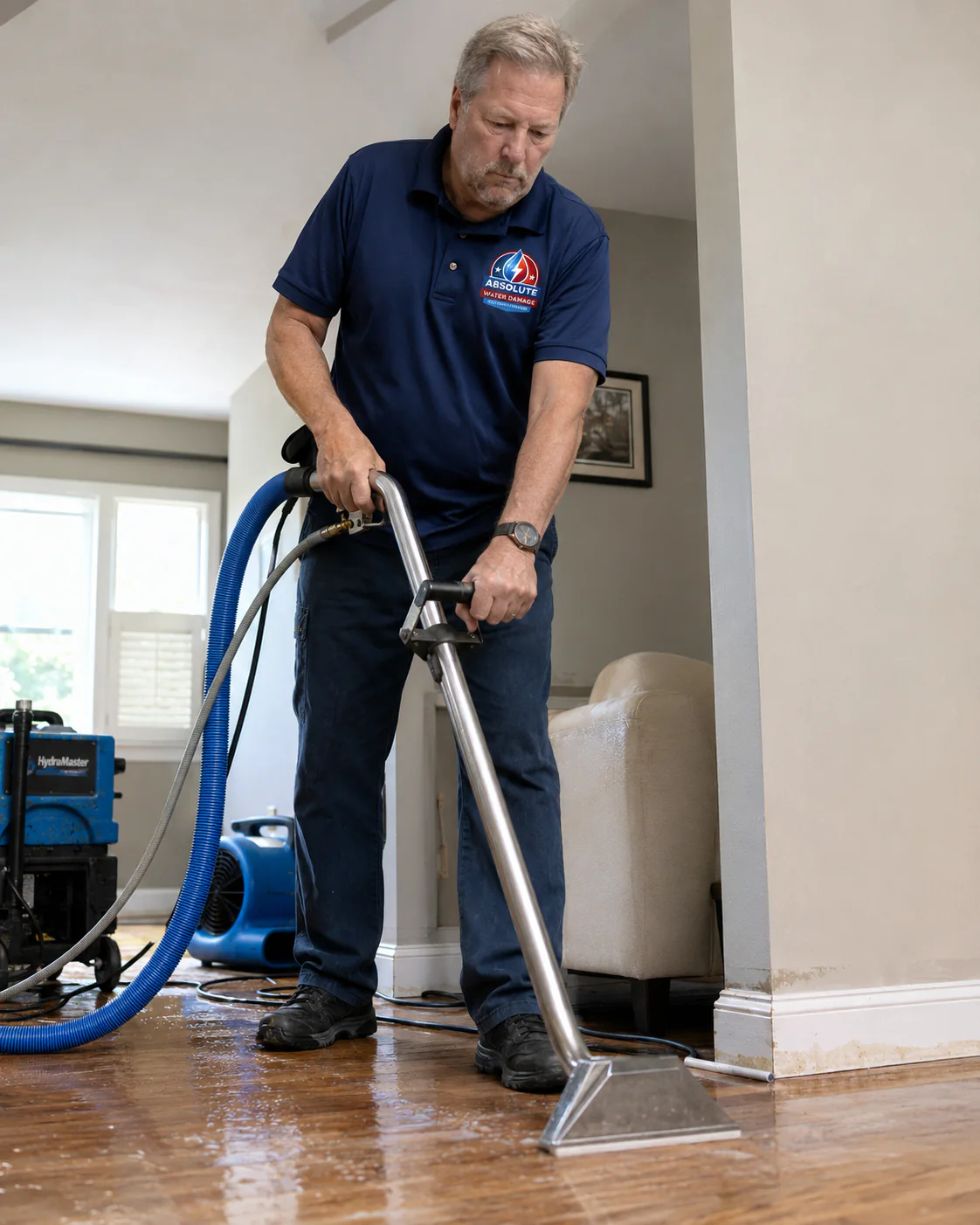
The first job is getting standing water out and finding where moisture has spread. After that comes structural drying, so the framing and subfloor dry instead of the problem returning later. We pump down standing water, dry the joists and subfloor, and treat for microbial growth so it does not come back next winter.
- Moisture tracing: infrared cameras and moisture detection equipment to find water behind surfaces before it becomes mold.
- Drying: structural dry-out with air movers, dehumidifiers and heat.
- Finished basements: we dry the slab and bottom plates in place before anyone reaches for a pry bar.
- Older Edmonds homes: compact equipment that fits through older doorways and up narrow stairs.
- Fixing the source: under the IICRC S500 standard, correcting the cause of the water is the owner's responsibility, though a restorer or specialist can be hired for it.
Typical cost is $1,500 to $6,000 for one or two rooms; larger losses cost more
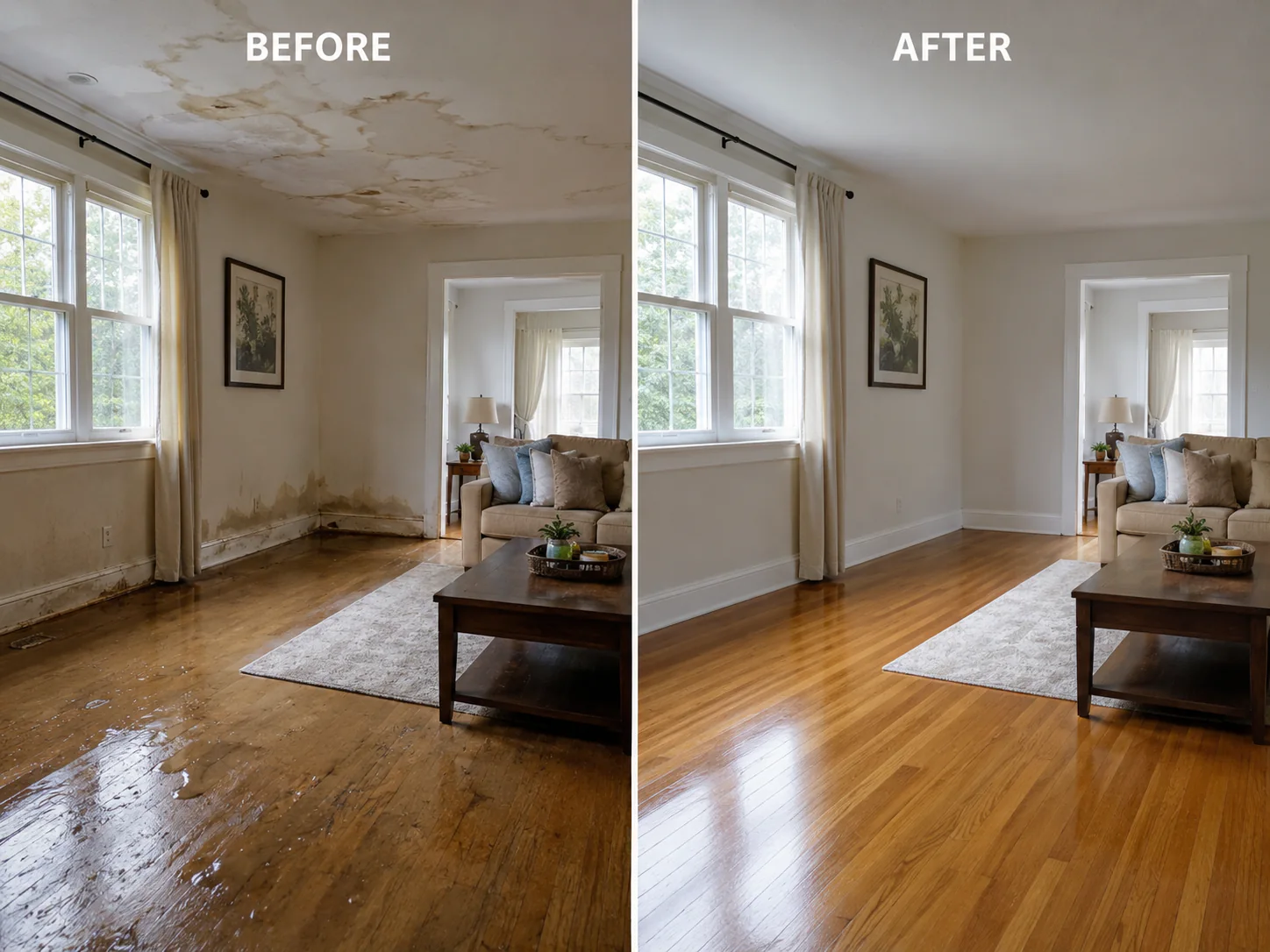
Most one- or two-room dry-outs in our area fall in the same range. The exact number for your home depends on what we find, so we don't guess at a figure sight unseen. We come out, look at the home, then sit down with you to go through the estimate.
- Cost follows the size of the loss. Larger losses with flooring or drywall removal cost more, and we give a figure only after seeing the damage in person.
- Larger losses that need flooring or drywall removal cost more.
- No figure before an in-person look; then we review the estimate with you.
Insurance: you can start mitigation before the adjuster calls back
You don't have to wait for your adjuster to begin emergency mitigation. Photograph everything before you move it. We write the scope in Xactimate, the pricing software insurers use, and in most cases we bill your carrier directly instead of you.
- Insurance requires an estimate only for putting the house back together, not for the emergency removal itself.
- We will tell you what to expect before you file anything.
- On remediation jobs, photographs, moisture logs and post-remediation verification go to you and your carrier before we leave.
Why speed and thorough drying matter
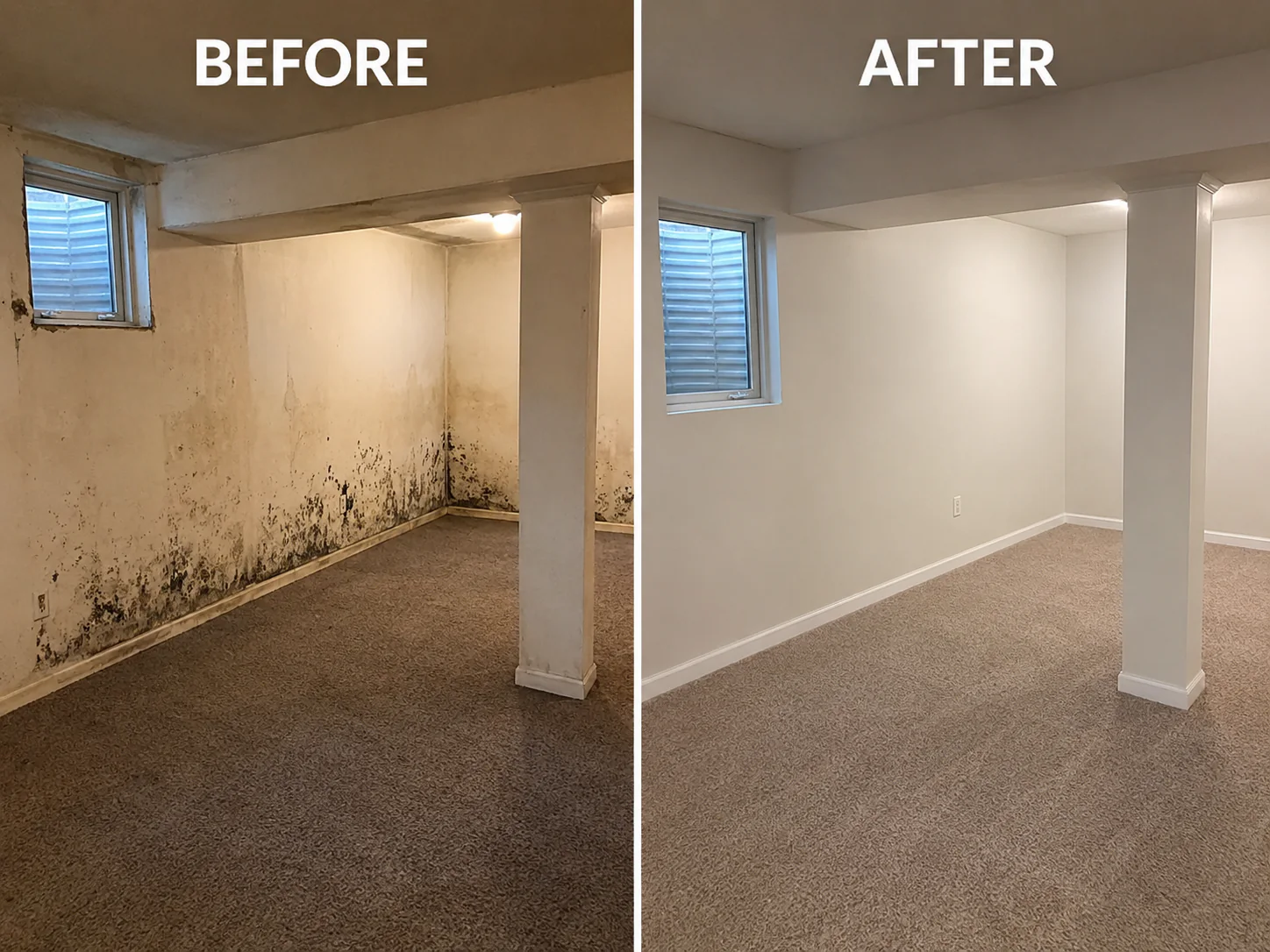
Mold spores need moisture to start growing, and they can grow on wood, drywall, carpet and insulation. The Washington State Department of Health advises cleaning and drying water-damaged carpets, bedding and upholstered furniture within 24 to 48 hours, or considering replacing them. Hidden moisture matters too: if a wet wall bay gets closed up anyway, you end up paying for the same repair again next spring.
- Department of Health: hire a professional if mold covers more than about ten square feet, is sewage-contaminated or is in hidden places.
- Don't paint or caulk over mold; it keeps growing underneath.
How to choose an emergency water removal company in Washington
Washington has no specific certification requirement for water damage or mold restoration, so anyone can claim the title, according to the state Department of Health. Training organizations such as the IICRC do certify businesses, and the Department of Health points homeowners to them.
- Check that the contractor is licensed, bonded and insured, with no recent infractions.
- Look the contractor up on Washington L&I's free Verify tool before you sign.
- Get written bids so you can compare scope and price side by side, and check references for reliability and communication.
- Ask about certification: our technicians are IICRC certified.
Common questions
Is there emergency water removal near me in Alderwood Manor, Bothell, Brier or Edmonds?
Yes. We answer 24 hours a day, seven days a week at (206) 856-3173.
Do you handle emergency water removal in Mountlake Terrace and Everett?
Yes. Cost depends on the size of the loss, and larger losses with flooring or drywall removal cost more. We give a figure only after we've looked at the damage in person. Then we sit down with you and go through the estimate together.
What's the difference between emergency water removal and water restoration?
Removal and drying come first: pumping standing water, drying joists and subfloor, and treating for microbial growth. Restoration means putting the house back together, which is the part insurance requires an estimate for.
What should I do before help arrives?
Photograph everything before you move it. You can start emergency mitigation before an adjuster calls you back.
Next step
Request emergency water removalSources
- S500 – IICRC — iicrc.org
- Hiring an Indoor Air Investigator or Contractor | Washington State Department of Health — doh.wa.gov
- Mold | Washington State Department of Health — doh.wa.gov
- A Brief Guide to Mold, Moisture and Your Home | US EPA — U.S. Environmental Protection Agency
- Mold Remediation in Schools and Commercial Buildings Guide: Chapter 3 | US EPA — U.S. Environmental Protection Agency
- Mold Course Chapter 2: | US EPA — U.S. Environmental Protection Agency